

From thread to ritual, this is The Banyo
Rooted in tradition, designed for today
Discover how Mediterranean rituals, intentional ingredients, and sensory textures come together — in every bottle and every glove.

A Glove That Breathes
Exfoliation, reimagined
Some call it a scrub or exfoliating glove
We call it The Kese.
Our exfoliating mitts are woven from a unique, airy yarn that feels soft at first — then gently tightens when met with water.
This subtle shift creates the perfect texture for deep exfoliation, without irritation.
It’s not magic. It’s movement, material, and a bit of wisdom passed down
THE KESE
Our mitts are made on 150-year-old thread machines — still running, still reliable.
They need skilled hands and full attention.
Our makers know exactly how to work with them — and that’s what makes the difference.


The fields that scent our formulas
We don’t buy essential oils off a shelf — we partner with small farms, and yes, sometimes we walk the fields ourselves.
Lavender, geranium, frankincense... not just for smell.
Each one is there for what it does, and how it makes you feel.


How a grandmother's bathroom changed everything
Some of the most important moments in my life have happened in a bathroom.
Not a spa. Not a clinic. Not some curated wellness retreat with eucalyptus towels and ambient sound bowls. A real bathroom — small, steam-fogged, smelling of something herbal and ancient and deeply, inexplicably safe.
My grandmother's bathroom in the Aegean region of Turkey was about eight feet wide. It held a cracked tile floor, a copper bowl she'd had for decades, and shelves lined with oils and waters and dried things I couldn't name as a child. Every visit ended the same way: she'd mix something, press it into my skin, and say something I roughly translated as "this is how we take care of ourselves."
I didn't understand then that she was handing me an entire philosophy.
The hamam changed me first.
My first real Turkish hamam experience as an adult stopped me cold. The ritual of it — the heat, the kese exfoliating glove moving across your skin in long, deliberate strokes, the oils applied after, the unhurried intentionality of it all — felt nothing like the rushed, product-saturated skincare routines I'd brought back home with me to the States. There was no twelve-step process. No serum hierarchy. No anxiety about whether I was doing it right.
There was just: warmth, oil, breath, time.
The skin that emerged on the other side wasn't just softer. I felt reset. Like someone had hit a quiet button on everything loud and unnecessary.
I started paying closer attention after that. To the rose water my grandmother misted over her face every morning — what we'd now call a hydrosol. To the grapeseed oil she used on everything from dry elbows to dull hair, trusting something the Mediterranean had trusted for centuries. To clary sage and frankincense and patchouli — not as trendy ingredients on a label, but as living things with actual history in a culture's aromatic and skincare traditions.
Then I came back to American shelves and felt the loss.
I don't want to be unkind about the US clean beauty market — there's so much I genuinely admire about this industry's push toward transparency and better ingredients. But when I went looking for that feeling — the hamam feeling, the grandmother's-bathroom feeling — I couldn't find it.
Everything was clinical. Everything was urgent. Fix this. Correct that. Achieve this result in fourteen days. Even the "luxurious" options felt more like performance than ritual. Beautifully packaged anxiety, dressed up in botanicals.
And the scent — oh, the scent. Nobody seemed to understand that fragrance isn't decoration. In Mediterranean tradition, the aromatic experience is the heart of the ritual. Lavender is traditionally valued for its calming aromatic properties. Frankincense has been used in aromatic rituals across cultures for millennia. The scent is the point. The scent is what makes a routine into a ritual.
I couldn't find a brand that understood both things at once — genuine cultural lineage and a sensory-first, mood-led approach to self-care. So I decided to build it.
The Banyo Co. started with one product and one question.
Banyo is simply the Turkish word for bath. It felt exactly right — grounded, warm, unpretentious, and rooted in the place where all of this began for me.
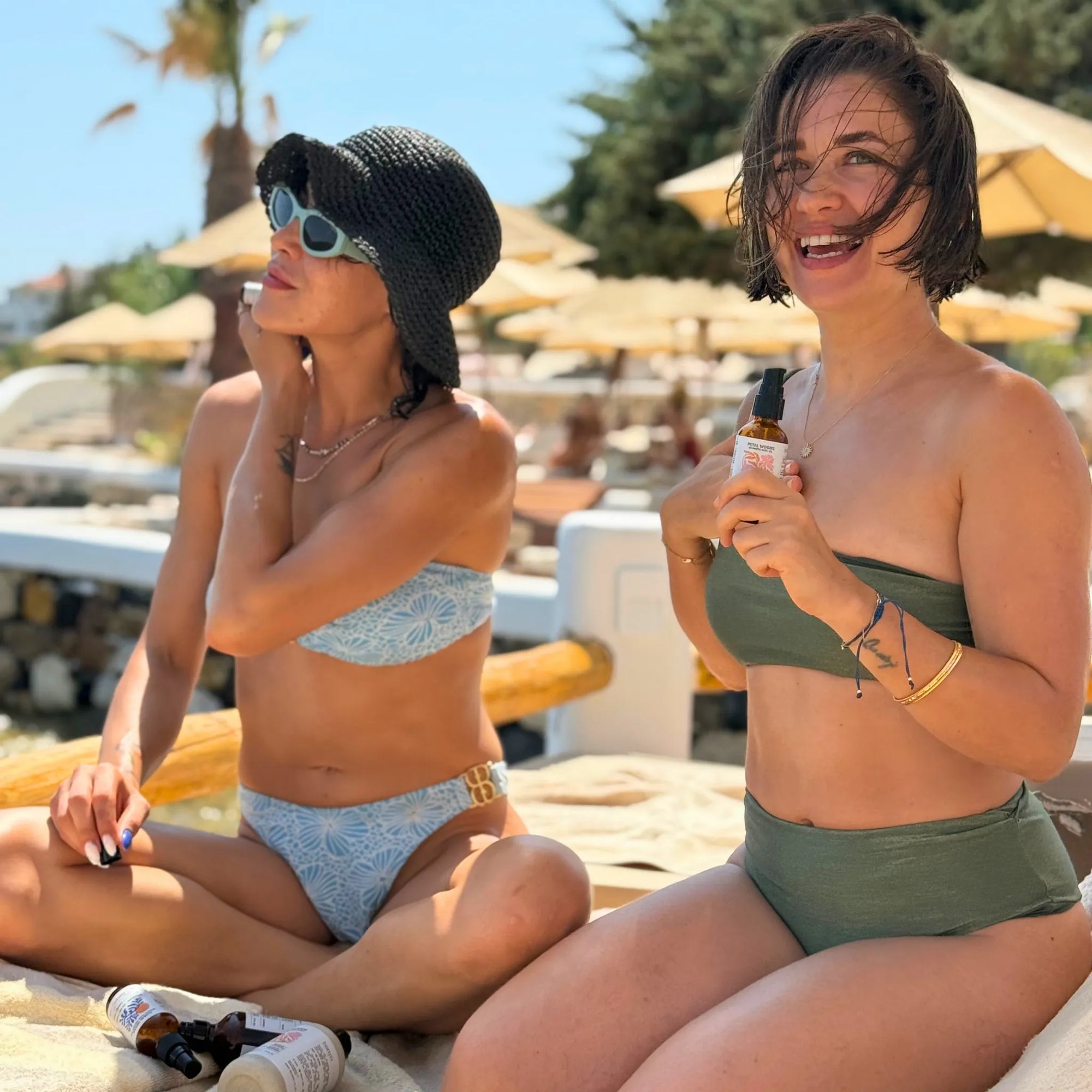
The first thing I made was a body oil. I wanted something that felt like an Aegean summer in a bottle — grapeseed as the base because it absorbs like a whisper, layered with aromatics chosen for their mood-associated sensory qualities, not just your Instagram caption. I gave it to friends. They asked for more. They asked if I had anything else.
I did. Eventually.
Here's what I believe, at the core of everything we make:
Your daily self-care routine is either a chore or a ritual. The ingredients are largely the same. The difference is intention — and intention is something you can design for.
We make products that give your hands something beautiful to do, your nose something meaningful to follow, and your senses permission to exhale. Everything we formulate starts with mood first: how do you want to feel when you step out of that shower, that bath, that quiet ten minutes you carved out for yourself?
Clean ingredients matter — deeply. Cultural wisdom matters — deeply. But what gets you to reach for something every single day is the way it makes you feel when you do.
We're just getting started.
There are more rituals to share, more ingredients with stories worth telling, more moments of oh, this is what taking care of yourself is supposed to feel like waiting to happen. The Banyo Co. is a small brand with a long memory and a very clear direction.
Welcome to the bathroom. We've been expecting you.
Questions People Ask About The Banyo Co.
What does "Banyo" mean and where does the brand come from?
Banyo (pronounced bahn-yo) is the Turkish word for bath. The Banyo Co. was founded on the philosophy and bathing traditions of Mediterranean and Turkish Hamam culture — specifically the ritual approach to cleansing, exfoliation, and aromatic self-care that has been practiced in the Aegean region for centuries. The brand brings those time-honored rituals to modern American self-care routines through clean, sensory-forward products.
How is The Banyo Co. different from other clean beauty brands?
Most US clean beauty brands lead with clinical efficacy — ingredient percentages, dermatologist testing, targeted skin concerns. The Banyo Co. leads with mood and ritual experience first. Our products are aromatherapy-led, meaning fragrance and sensory design are central to the formulation philosophy, not afterthoughts. We also draw from a specific cultural heritage — Turkish Hamam tradition and Mediterranean apothecary practice — rather than broadly "natural" positioning, which gives our approach both authenticity and depth.
What are the hero ingredients in Banyo Co. products and why?
Our formulations center on ingredients with both historical credibility and well-regarded skin benefits: grapeseed oil for lightweight, fast-absorbing moisture; aloe vera, known for its traditionally soothing feel on skin; lavender and clary sage, known for their calming aromatic properties; frankincense for its long history in aromatic ritual use and skin-conditioning properties; geranium for balancing and uplifting; castor oil for its rich, luxurious conditioning feel; and citrus essentials like lemon and orange, known for their uplifting aromatic quality and associated with an energizing, visibly radiant-looking skin feel. Every ingredient earns its place on both a sensory and functional level.